
WCF Blog
Crying out
How often have you come across a sentence like this in the Bible And when he heard that it was Jesus of Nazareth, he began to cry out and say, “Jesus, Son of David, have mercy on me!” (Mark 10:47)
Wrong answer
Paul wrote his first letter to the church in Corinth, Greece, in an attempt to correct some very serious problems. There were doctrinal problems, behavior problems, and especially problems in how they conducted their worship and fellowship, the “breaking of bread”. From the way he addressed them, it appears that the church—at least many in the church—didn’t even perceive them as problems.
Short
“It’s impossible!” Ever read something in the Bible that makes you say that? I’m not talking about something miraculous—which by definition is God’s power doing something that ordinarily would be impossible. I’m talking about it presenting a requirement or expectation that we can’t possibly meet. A prime example: Jesus commands, “You therefore must be perfect, as your heavenly Father is perfect.” (Matthew 5:48) Impossible!


Eternal Life
I’ve just returned from a week-long Bible School, a retreat with classes and activities for all ages, focused on the Bible. This posting is the result of a point emphasized in one of the classes. (Thank you, brother!) His point was this: When we read of “eternal life” in the Bible, the term is not (at least not always) equal to “everlasting life” or “immortality”.
God is not
We need to focus primarily on who God is. However in several places, God inspires writers of the Bible to mention what He is not. If we think about it, this is bound to be helpful. We want to understand our God, and that has to include knowing the boundary between what is and what is not true of Him.

Pay attention
An extended focus on the ways we are prone to fail, spiritually, might seem overly discouraging. Yet that’s what the writer to the Hebrews gives us. We may not really think of Hebrews in this way, because there’s so much positive as well. But woven in among the positives, there’s just such an extensive look at spiritual failures.

Be spent
The church in Corinth had problems. Doctrinal, moral, factional, social, attitudinal, spiritual. The apostle Paul had established this church, staying there for a year and a half during his second preaching tour around the Mediterranean. During his third tour, hearing about their problems, he feels compelled to write letters to this church—two letters preserved for us in the New Testament and apparently at least one other.

Pursuing a Faith That’s Real Through Music
The 1848’s approach to music is one grounded in honesty, humility and the ongoing struggle of living a life of faith. Based out of Ann Arbor, Michigan, Charles Cintron is the producer and artist behind The 1848. He creates music that blends atmospheric indie textures and alternative rock and hip hop: crafting a tone that speaks to the tension between surrender and overcoming.

Nationalism
Rahab the Canaanite believed in the God of Israel, and was welcomed into Israel. Ruth the Moabite the same. These two were early examples of a principle that was clear in the Law of Moses, and was then made very clear in the New Testament. The nationality we’re born into does not matter. What matters is faith in the God of Israel, extended in the New Testament to include His Son the Lord Jesus Christ.
And be thankful
We may think of Paul as the apostle to the Gentiles—which he certainly was. But he was also the “thankful apostle”. Of the 69 times in the New Testament where thankfulness is mentioned, 49 of them are in Paul’s letters. The only two times being thankful is mentioned in Acts, both are Paul. (The numbers in different translations vary, but only very slightly.)
Magnify
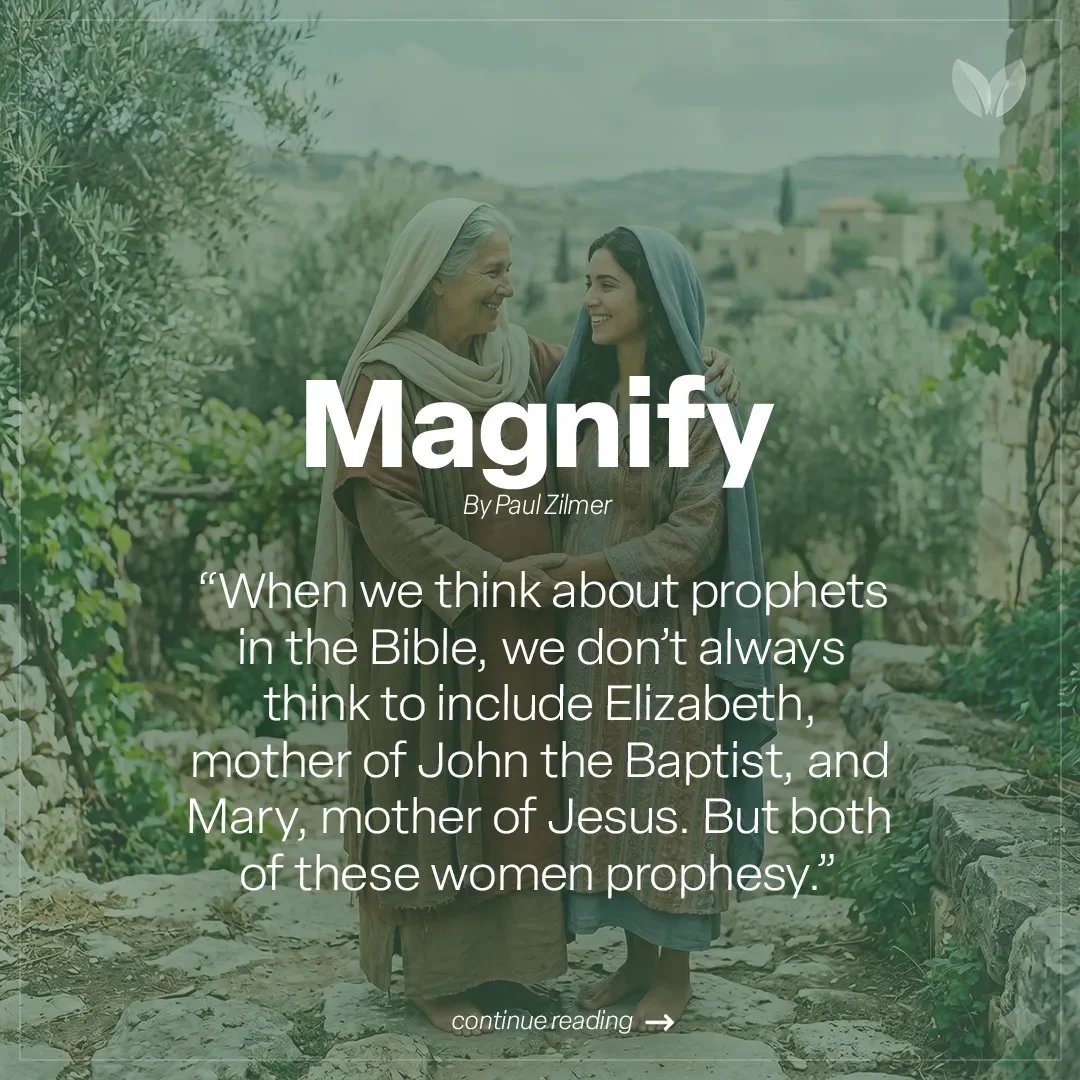
When we think about prophets in the Bible, we don’t always think to include Elizabeth, mother of John the Baptist, and Mary, mother of Jesus. But both of these women prophesy, when Mary goes to visit Elizabeth after angelic announcements of miraculous motherhood to both of them. This meeting is recorded in Luke 1:39-55.
Commission
At birth my parents gave me the name “Paul”. Partly in honor of a grandfather, whose middle name was Paul. (I got the other grandfather’s first name as my middle name.) But besides the family connection, my parents named me for the apostle Paul. Giving me a reminder, every time I heard or wrote my name, that this was a person they hoped I would aspire to be like.

Transition
I thought about giving these thoughts the title “Disruption”. “Transition” sounds much more positive, doesn’t it? But anytime there’s a transition, there’s going to be disruption. There are a handful of important transitions recorded in scripture, and all of them are disruptive.