

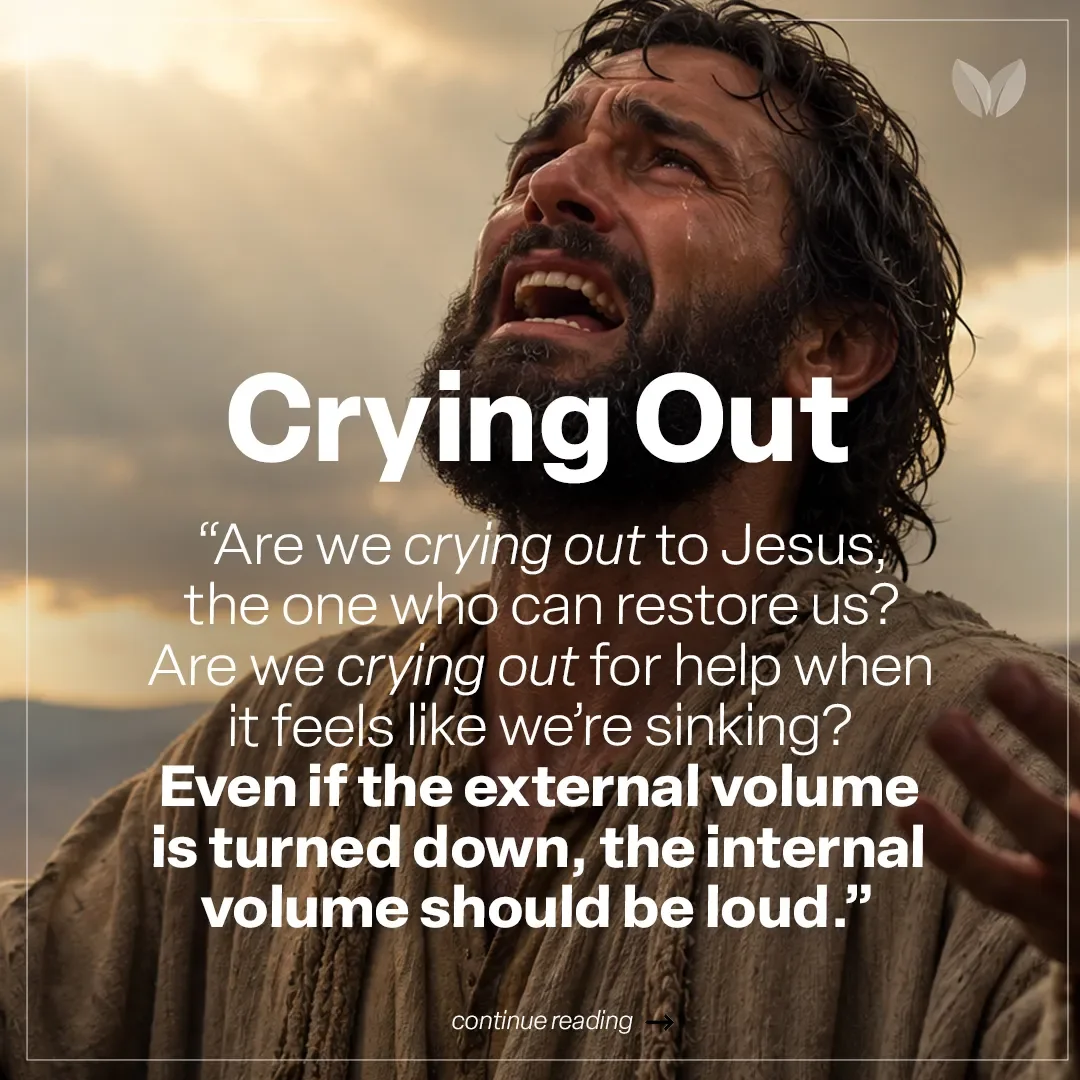
How often have you come across a sentence like this in the Bible?
And when he heard that it was Jesus of Nazareth, he began to cry out and say, “Jesus, Son of David, have mercy on me!” (Mark 10:47)
Well, if you’ve read all of it, in the New Testament alone you’ve come across it over 130 times. I suspect that most of us usually read right over the words. Yes, we recognize them as the request of a blind beggar. But I wonder how often we stop to consider what it means that he “cried out”. We read those words often enough that I think they lose their impact.
So this time let’s stop and think about it. This blind man thought he had a chance to see again. Can you put yourself in his place? How intensely would you want your sight to be restored? How intensely would you try to get the attention of the one you think can do it? How much emotion would there be in your voice? How much volume? To be heard above the noise of a large crowd, you would be shouting at the top of your lungs!
People seem to be “crying out” left and right in the New Testament, particularly the gospels. If we’re reading a passage together, at a church service or Bible reading group, does the reader ever SHOUT the words, in an anguished voice?
But are we sure that’s really called for? Lexicons help us understand the meaning of the words used in the original text, which is Greek for the New Testament. They inform us there are three word families used for “crying out”. The one used here (the most commonly used one) can be rendered “scream”, “shriek”, “exclaim”. Not a mild or weak voice!
When you read the sentence a minute ago, did you mentally scream it?
Other instances help us understand. This word is what the disciples did when they thought they were about to die in the storm, with a ghost approaching the boat (Mark 6:49). Think there was some strong emotion there? It’s also what the crowds did at Jesus’s triumphal entry into Jerusalem (Mark 11:9), and then again when they clamored for his crucifixion (Mark 15:13).
Do you ever picture Jesus shouting with strong emotion and high volume? He did. (John 7:28 & 37) And we do too, if we are among those Paul describes as crying, “Abba! Father!” (Romans 8:15 & Galatians 4:6) The volume might only be in our mind, but he surely is talking about intensity.
And we haven’t even mentioned the fact that more than 30 times this shouting is emphasized by the words, “with a loud voice”. Apparently extra loud.
People all over the New Testament are yelling, shouting, screaming even. The culture I grew up in doesn’t encourage shouting in most circumstances, except at sports events. We just don’t give vent to our feelings with loud, impassioned cries. Middle Eastern culture, among others, does seem to accept and even expect such crying out. I suggest we should notice, as we read about people who are crying out. They do so a lot. Is there the same kind of intensity in our entreaties, our expressions of thankfulness and joy, our pleas for mercy?
When we pray, are we crying out to Abba, our Father? Are we crying out to Jesus, the one who can restore us? Are we crying out for help when it feels like we’re sinking? Are we crying out Hosanna to the Son of David? Even if the external volume is turned down, the internal volume should be loud.
Let’s not allow our reading (silent or aloud) be done in a monotone with no feeling. The message we have received from God should touch us deep within. The vileness of sin, the glorious hope of the Kingdom, the love of God—all these and more are things to cry out about. In repentance, in gratitude, in loving response to the love shown to us.
Love, Paul