

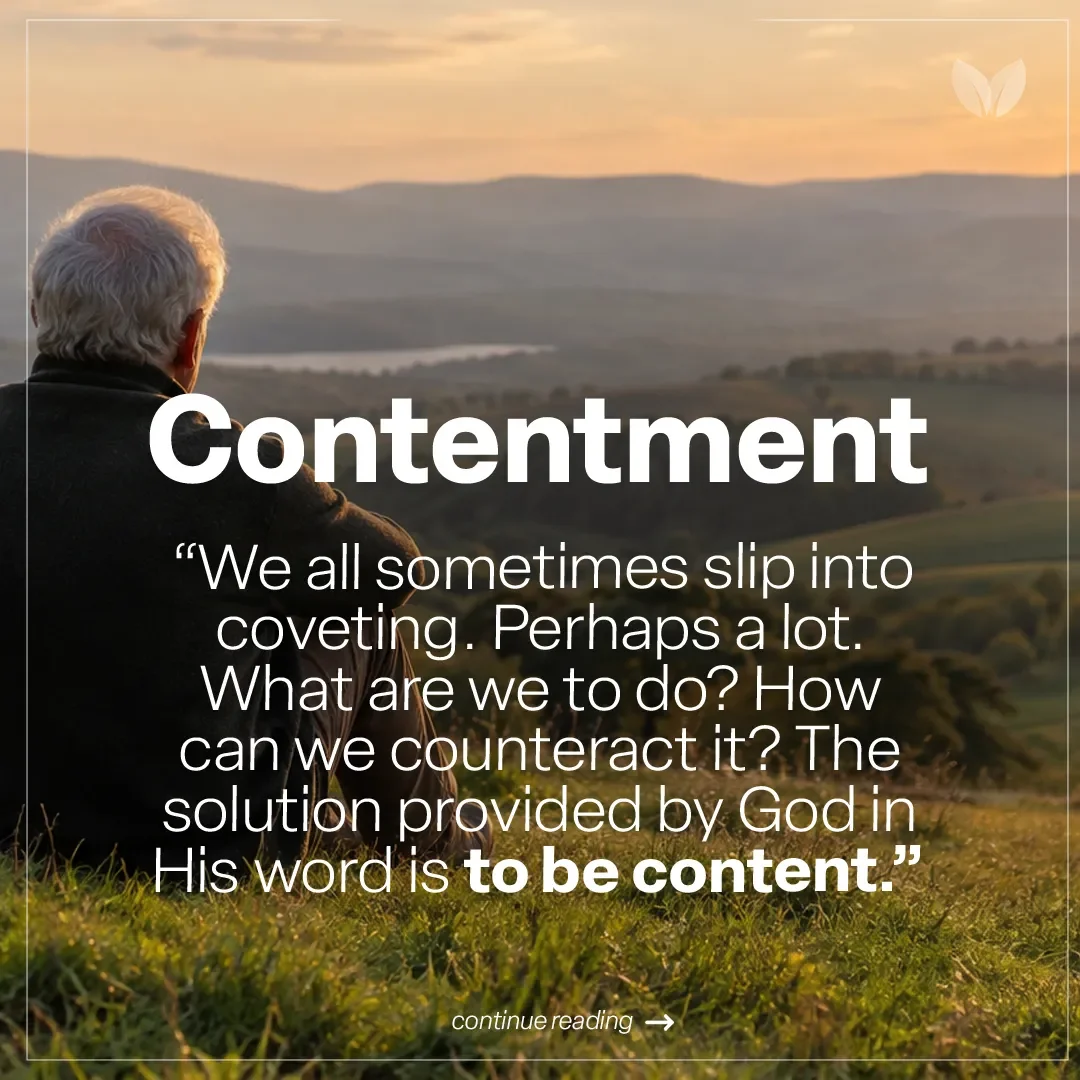
Contentment
In our vocabulary there are “Bible words”, words we use in conversations about the Bible, but we don’t use much (or at all) otherwise. One of these is “covet”. We all recognize that “covetousness” is wrong. The tenth of the Ten Commandments is:
You shall not covet your neighbor's house; you shall not covet your neighbor's wife, or his male servant, or his female servant, or his ox, or his donkey, or anything that is your neighbor's. (Exodus 20:17)
From this it’s common to think that “covet” means specifically to wish we had what our neighbor has. That’s not quite right. That feeling is what the Bible calls “envy”—also not good, but not the same thing. Coveting is wider, extending to desiring something, whether or not your neighbor has it.
In both the Hebrew of the Old Testament and the Greek of the New Testament, the words translated “covet”, “covetousness” and so on, actually just mean a strong desire. We don’t have something, and we want it—sometimes intensely. Mostly “coveting” doesn’t enter into our everyday conversation. But wanting appears very often in our daily thinking, our daily living.
The opposite of “coveting” is “contentment”. We all sometimes slip into coveting, or the “lust of the eyes” as John puts it. The spiritual side of our minds recognizes we shouldn’t be going there—but we do. Perhaps a lot. What are we to do? How can we counteract it? The solution provided by God in His word is to be content.
When John the Baptist was actively preaching, people came to him with questions about what he meant by his call to repent. A group of “soldiers” (probably Temple police) asked what they should do. John’s reply:
Do not extort money from anyone by threats or by false accusation, and be content with your wages. (Luke 3:14)
We may not be in a position of authority that would tempt us to abuse our power for profit. But John’s second point hits home for an awful lot of us: “Be content with your wages.” Whatever we are earning, it’s a common trait of humanity to want more. To not be content with our wages.
John isn’t alone. The same solution is stated a number of times. This one is famous:
But godliness with contentment is great gain, for we brought nothing into the world, and we cannot take anything out of the world. But if we have food and clothing, with these we will be content. But those who desire to be rich fall into temptation, into a snare, into many senseless and harmful desires that plunge people into ruin and destruction. For the love of money is a root of all kinds of evils. It is through this craving that some have wandered away from the faith and pierced themselves with many pangs. (1 Timothy 6:6-10)
Paul doesn’t just order us to stop those harmful desires. He identifies the weapon that we can use to defeat them: contentment. We might think contentment is having all we want. That’s essentially true, but not because we’ve fulfilled all our desires, obtaining everything we want. It’s the other way around. It’s taking whatever we have as being enough, and not pursuing more.
Contentment doesn’t happen to us. For believers, it’s something actively cultivated. How? The writer to the Hebrews points us in the right direction:
Keep your life free from love of money, and be content with what you have, for he has said, “I will never leave you nor forsake you.” So we can confidently say, “The Lord is my helper; I will not fear; what can man do to me?” (Hebrews 13:5-6)
We believe in God—that’s good but not enough. Over and over we are told we must believe God, believe what He says, trust Him. He says, “I won’t ever forsake you.” If we really believe that, we can be content with what we have.
I won’t pretend this will come easy. Paul didn’t. He had to actively cultivate contentment:
Not that I am speaking of being in need, for I have learned in whatever situation I am to be content. I know how to be brought low, and I know how to abound. In any and every circumstance, I have learned the secret of facing plenty and hunger, abundance and need. I can do all things through him who strengthens me. (Philippians 4:11-13)
Being content was something he had to learn. He learned it through experiencing both the lows and the highs. And what he learned was that the only solution is being convinced there is one who strengthens us in any circumstance. The same point we saw in the Hebrews passage: “The Lord is my helper.”
Contentment is a decision. It’s not something that happens to us based on having what we desire. The pursuit of contentment on that basis is what “plunges people into ruin and destruction.” Real contentment is a decision based on trust, believing it’s actually true: What I have is enough. No need to crave more.
Love, Paul