

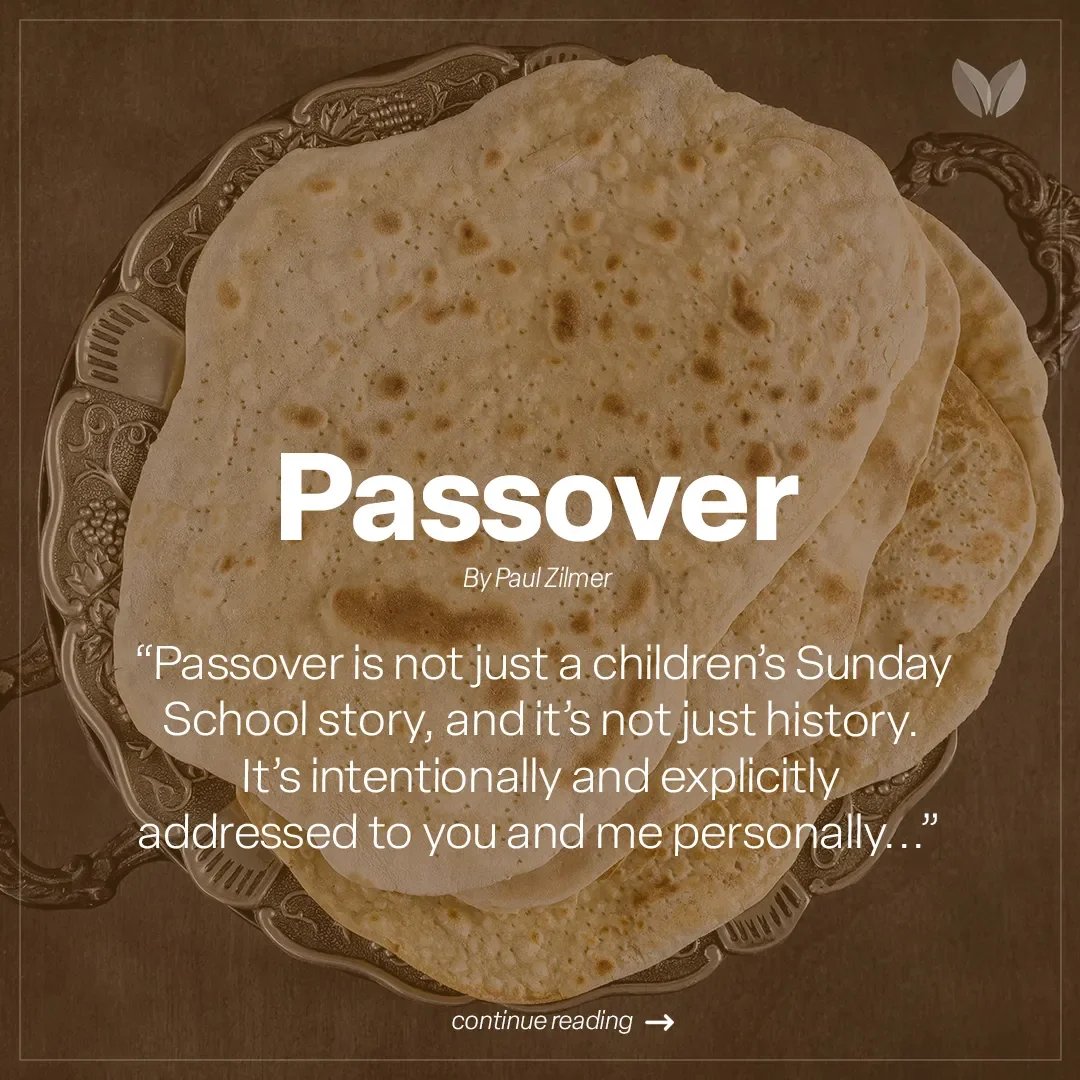
Passover
In the reading plan I’m using, I’m brought once again to Exodus, Probably we would work it out, but we don’t have to guess. We’re told plainly that the Exodus and Israel’s experience in the wilderness are “types” (that is, allegorical figures) of ourselves. Paul says it in 1 Corinthians 10:1-12. (Many versions read “examples for us” rather than the stronger and more accurate “types of us”.)
Paul therefore strongly exhorts us to pay attention. We aren’t just reading about ancient Israel here, we’re reading about ourselves.
As you know, Israel’s departure from Egypt is commemorated in the observance of Passover, which is also the Feast of Unleavened Bread. Earlier in this same letter Paul had said, “Cleanse out the old leaven that you may be a new lump, as you really are unleavened. For Christ, our Passover lamb, has been sacrificed. Let us therefore celebrate the festival, not with the old leaven, the leaven of malice and evil, but with the unleavened bread of sincerity and truth.” (1 Corinthians 5:7-8)
The connection for Christians couldn’t be any plainer. Right here, Jesus Christ is our Passover lamb, and we are obliged to purge the “leaven” of sin from our lives. In chapter 10 he says baptism is our crossing of the Red Sea, leaving behind the domain of sin (“Egypt”). And he points out the warning not to act the way Israel did in their rebellions in the “wilderness” of our life now, before we come to the promised land.
Sorry if this is all very familiar. I just want to make sure we appreciate that the details of the Exodus account have important meaning for ourselves.
Such as Exodus 13:8, which is in the middle of the command from the Lord to celebrate the Passover every year down through the generations. Here’s the verse:
You shall tell your son on that day, “It is because of what the LORD did for me when I came out of Egypt.“
Did you catch the impact? For all time, parents are not only to tell their children about the historic deliverance. They are to make it personal. It’s what the Lord did for me, when I came out of Egypt. Even generations later, the deliverance is to be personal.
This is what we are supposed to do also—make it personal. This is what the Lord did for me when he gave His only Son (our Passover lamb).
And—do you see it?—we are supposed to tell it. The Hebrew word is very strong: to announce, proclaim, declare, explain. Not just telling a story! In 1 Corinthians 10, Paul goes on to talk about eating bread and drinking wine and how these bind us into one body. Then in the next chapter he recounts what Jesus commanded to be done to remember him, then Paul says, “For as often as you eat this bread and drink the cup, you proclaim the Lord's death until he comes.” (1 Corinthians 11:26)
Paul still has the Exodus in mind, I think. The command is there in Exodus and remains there in Christ, to tell, to proclaim, what Christ our Passover lamb has done to redeem us.
Israel was to commemorate the Passover once a year. We are to commemorate Christ’s sacrifice as often as we eat the bread and drink the cup. Not as a mindless ritual, but genuinely discerning what it means (as the next verses caution).
So. Whenever Exodus comes up in your reading, this time don’t skim through it, even if it’s very familiar. Passover is not just a children’s Sunday School story, and it’s not just history. It’s intentionally and explicitly addressed to you and me personally, to find ourselves in the story, to remember, and to proclaim.
Love, Paul