

Magnify
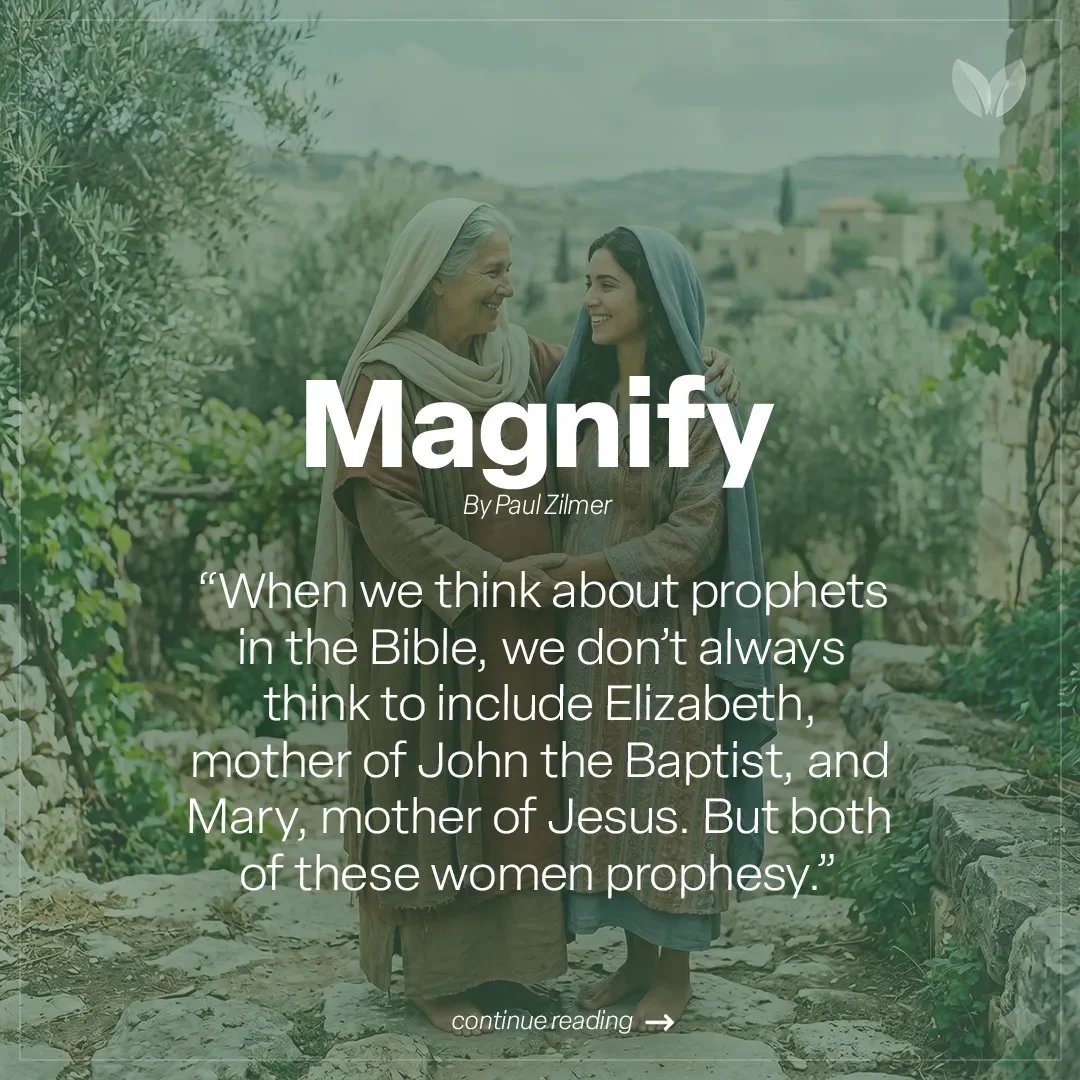
When we think about prophets in the Bible, we don’t always think to include Elizabeth, mother of John the Baptist, and Mary, mother of Jesus. But both of these women prophesy, when Mary goes to visit Elizabeth after angelic announcements of miraculous motherhood to both of them. This meeting is recorded in Luke 1:39-55.
The prophecy Mary gives is often called the “magnificat”, because she begins, “My soul magnifies the Lord, and my spirit rejoices in God my Savior…” She then goes on to make a series of inspired pronouncements. A number of them are straightforward, but some others are a little puzzling. Let’s look at the whole set, one by one.
“He has looked on the humble estate of his servant.” She’s talking about herself. The phrase “looked on” is an idiom for answered prayer. (See Genesis 29:32 for example.) Implication: Mary had been praying that she would be the mother of Messiah.
“All generations will call me blessed.” Quite true, of course. She was blessed indeed, although her role would never be easy.
Three true statements about God: “He who is mighty has done great things for me.” “Holy is his name.” “His mercy is for those who fear him from generation to generation.”
And now come some pronouncements that should make us think, “Wait a minute…”
“He has shown strength with his arm.” The pregnancy is indeed a miraculous demonstration of God’s power, but it isn’t (yet) shown, made known.
“He has scattered the proud in the thoughts of their hearts.” How? The proud are not yet put to shame.
“He has brought down the mighty from their thrones and exalted those of humble estate.” Again, how? There has been no threat, let alone actual displacement, of the mighty.
“He has filled the hungry with good things, and the rich he has sent away empty.” Same again. This hasn’t happened. The rich are still the rich and powerful, and the bottom layers are still not satisfied with good. So, we must understand that these pronouncements are prophecies.
After these, Mary returns to what is true, glorious, and indeed worthy of praise:
“He has helped his servant Israel, in remembrance of his mercy.” Yes, the advent of the Messiah is immense. “Helped” is a tremendous understatement. This will be the salvation of Israel, and of all humanity.
“As he spoke to our fathers, to Abraham and to his offspring forever.” Yes, this linkage to the promises God made to Abraham is vitally important. Jesus is to be the promised offspring, and the promises are forever.
Gabriel had explicitly said that the child to be born to Mary would be the fulfillment of the promise to David, that Jesus would be the Son of David, King over Israel forever. Mary understands the implications. As the New Testament begins, “The book of the genealogy of Jesus Christ, the son of David, the son of Abraham.” (Matthew 1:1) Mary understands—if Jesus is the promised offspring of David, he must also be the promised offspring of Abraham.
And I think Mary makes another connection, which is the reason for those prophecies in the middle, which aren’t actually true yet. God hasn’t yet, but surely will, show to everyone the power of His arm, thwart the proud, bring down the mighty, reverse the dominance of the rich over the humble poor. To accomplish this, human nature itself must be conquered. Mary, I believe, makes the connection all the way back to the Garden of Eden, when God promises that the offspring of the woman will defeat and deal a death-blow to sin, and to its offspring, death.
All that is wrong with mankind will be rectified, by the grace of God working through Jesus Christ. We can surely join Mary in praising the Almighty for His gracious promises, and see in them our own hope and redemption. Yes, He has done great things for me. My soul should magnify the Lord. Holy is His name!
Love, Paul